

Moving safely matters a lot, which is why a good walker helps you go farther with less fear, less pain,
and more smiles. Let’s understand the main types of medical equipment walkers, who they help, and
how to choose and use one. We’ll also talk about easy tips regarding height, brakes, and the rolling
walker seat so you feel confident from day one. And if you’re near Cranbury, NJ, our local team can help
you try different styles and even rent a walker for short-term needs.
What is a Walker, and What is a Rollator?
A medical equipment walker is a sturdy frame you lift or glide to support your steps. It gives strong
balance help and can carry much of your weight. A rollator (often called a standard rollator walker) has
wheels on all legs, hand brakes, and usually a seat. It moves more easily and lets you rest when you
need a break. If you need to lean hard for support, start with a basic walker. If you want to move faster,
turn smoothly, and sit often, a rollator may be the better pick.
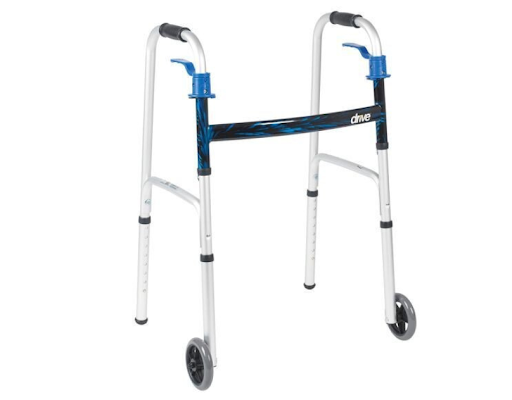
The Main Types Walkers
● Standard walker: Four legs, no wheels and is best for strong support and steady, slow steps.
● Two-wheel walker: Wheels in front, glides in back and is easier to push without lifting each step.
● Standard rollator walker: Four wheels, hand brakes, and a rolling walker seat is great for longer
trips, indoors or out.
● Travel walker: Light and folds very small and a quite popular example is the EZ Fold and Go
Walker, which is known for compact folding and easy transport.
● Heavy-duty (bariatric) options: Wider frames and higher weight limits for safe, comfy use.
How to Choose The Right Fit
Use this simple checklist:
- Your goal: Need more balance and weight support? Pick a standard or two-wheel walker. Want
smooth rolling and rest breaks? Choose a rollator. - Handle height: With shoes on, stand tall at the walker. Handles should line up near your wrist
crease, with your elbows bent about 15°. This helps comfort and control. - Seat needs: If you tire easily, look for a rollator with a comfy seat and easy-to-lock brakes.
- Home and car fit: Measure doorways and trunk space. Many fold compactly; travel styles fold
extra small. - Try before you buy: Test turning, folding, and braking. Make sure it feels safe and simple.
Safety Tips That Make a Big Difference
- Lock before you sit: On a rollator, always set the brakes before using the seat. Don’t sit on hills or ramps.
- Keep all wheels on the ground: This keeps the frame balanced.
- No backward walking or stair use: Walk forward on flat, clear paths.
- Check parts often: Make sure wheels roll smoothly, tips aren’t worn, and brakes grab well.
- Add the right extras: Baskets, bags, and trays keep your hands free and your posture tall.
Why Shop Local for Medical Supplies Walkers?
Friendly experts can size and adjust your walker on the spot. Trained fitters help you set the right height, choose grips, and practice using brakes. Monroe Medical Supplies has served neighbors since 1985 and keeps a trained fitter on hand, so you get real help, fast. If you only need it for a short time, the store also offers walker rentals by the month.
Quick Picks to Start Your Search
- Need strong support? Start with a standard walker or a two-wheel walker.
- Want easy rolling and rests? A standard rollator walker with a rolling walker seat is your friend.
- Travel lots or have tight spaces? Consider a compact option like the EZ Fold and Go Walker.
- Bigger body or extra support needed? Ask about heavy-duty frames with higher weight capacity.
Conclusion
Choosing the right walker isn’t hard when you think about your goals, fit, and daily life. Set the handles at wrist height, keep a light elbow bend, and practice the brakes. Try a few models, roll around the store, and pick the one that feels steady and easy. With the right medical supplies walkers and a helpful local team, every step can feel safer and more free. And remember: small changes in fit can make a big, happy difference.